
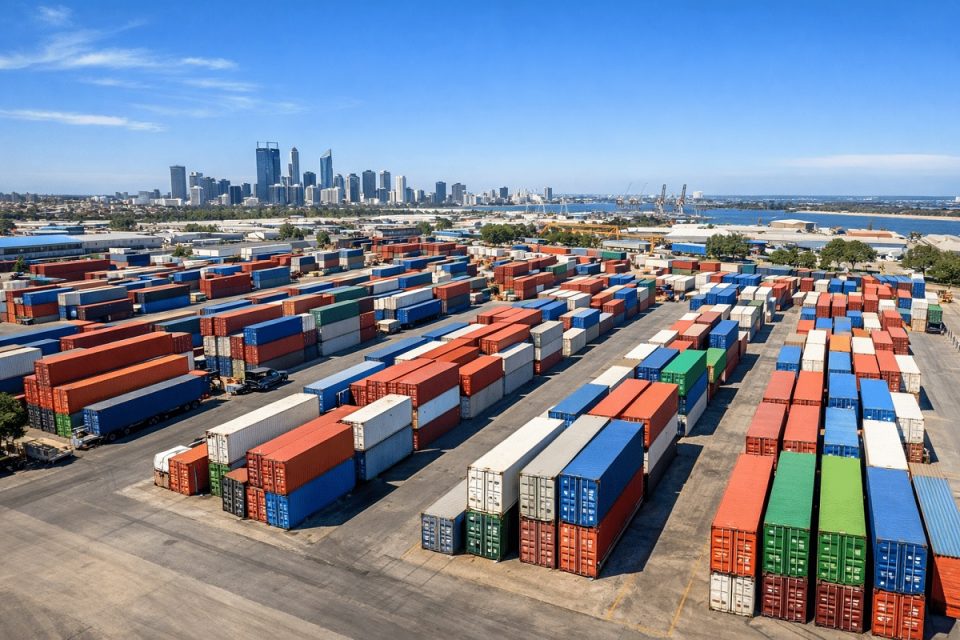
Ask any small business owner in Perth about their biggest operational headache and storage will come up more often than you’d expect. Stock overflow, seasonal equipment, tools that only get used twice a year but can’t be thrown out — it all has to live somewhere, and commercial rent for extra square metreage is rarely cheap. That’s part of why shipping container storage in Perth has quietly become one of the more practical solutions for businesses that have outgrown their existing space but aren’t ready to sign a bigger lease.
The Appeal of On-Site Storage
The obvious advantage of a container over an off-site storage unit is proximity. Instead of driving to a facility across town every time you need a piece of equipment, it’s sitting on your own site, accessible whenever you need it. For trades businesses in particular — plumbers, electricians, landscapers — this cuts out a genuinely wasted chunk of the working day.
There’s also a security angle that gets overlooked. A proper steel container with a lockable door is considerably harder to break into than a garden shed or an open-sided lean-to, which matters if what’s being stored includes power tools, stock, or anything else worth stealing.
Renting Space Isn’t Always the Right Answer
Commercial storage facilities charge by the square metre and by the month, indefinitely. For a business that needs somewhere to keep excess stock during a busy season, or equipment that’s only used on certain jobs, that ongoing cost adds up fast without ever actually solving the underlying space problem.
Hiring or buying a container instead shifts the economics. A hired shipping container can be brought in for a defined period and returned once it’s no longer needed, which suits businesses with seasonal fluctuations. Buying outright makes more sense for a business that knows it needs the extra space permanently and wants to stop paying rent on it altogether. Either way, it’s worth comparing container storage options against what an equivalent off-site facility would actually cost over twelve months — the numbers often surprise people.
Matching the Container to the Job
Not every business needs the same setup. A tradesperson storing hand tools and small equipment might get by comfortably with a compact 10-foot unit, while a business holding pallets of stock or larger machinery will need the full footprint of a 20 or 40-foot container. Getting this wrong in either direction is a common and avoidable mistake — paying for space that never gets used, or running out of room within months of delivery.
What to Consider Before Committing
A few practical questions are worth working through before choosing a storage container for a business site:
- How long is the container actually needed for? This decides whether hire or purchase makes more financial sense.
- What’s being stored inside it? Sensitive stock might need ventilation or climate considerations that a standard container doesn’t provide out of the box.
- Is the site accessible for delivery? Tight laneways, low overhangs, or uneven ground can all complicate placement.
- Does the container need to be moved again later? If the business might relocate, this changes whether hire remains the better option long-term.
Security and Weatherproofing
WA’s climate is generally kind to steel containers — there’s less of the sustained damp that causes rust issues in other parts of the country — but summer heat and dust still take a toll on seals and paintwork over time. A container in good condition, properly sealed at the doors and roof seams, will keep stock dry and protected through the wetter months without issue. It’s worth having this checked when sourcing storage solutions rather than assuming every unit on the market is in equivalent condition — older stock can look fine externally while having compromised seals.
Beyond Basic Storage
Some businesses go a step further and use a container as more than passive storage — a mobile workshop, a site office, or a lockable bay for tools that get used daily rather than sitting untouched. The line between “storage” and “small functional space” blurs quickly once a business has a container on site and starts working out what else it could be used for.
Final Thoughts
For Perth businesses weighing up their storage options, a shipping container solves a specific and common problem: needing secure, weatherproof space without the recurring cost of an off-site facility or the delay of a permanent building project. It’s not a fit for every business, but for the ones dealing with overflow stock, seasonal equipment or simple security concerns, it’s usually one of the fastest and most cost-effective options on the table.