
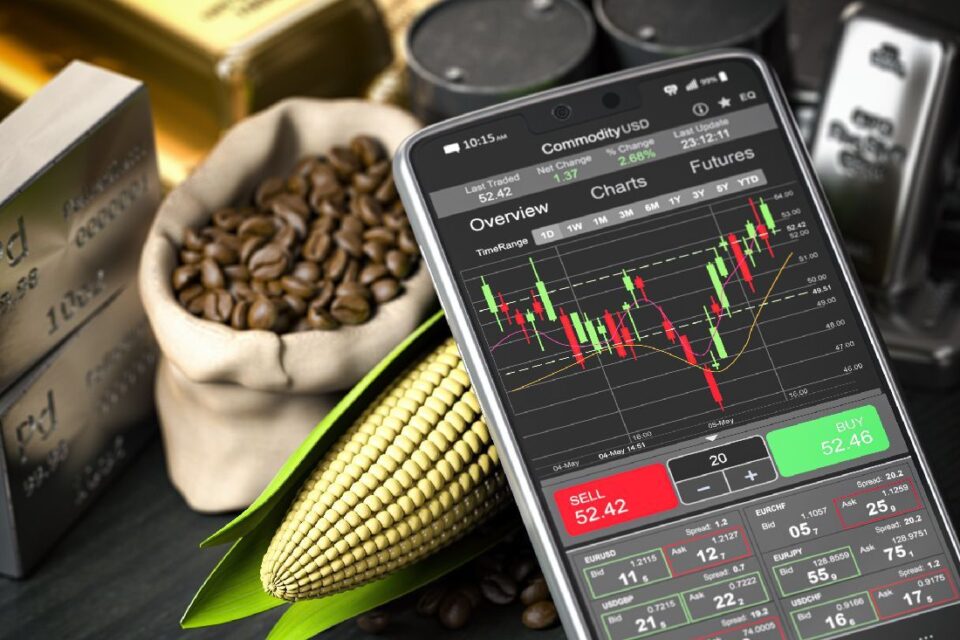
Commodity trading offers vast opportunities, yet it’s a domain where traders must navigate considerable risks, especially in volatile markets. Volatility in commodities can be driven by various factors, from geopolitical events to natural disasters. For traders, understanding how to manage these fluctuations is crucial. In this article, we will explore effective strategies that traders use to thrive in volatile commodity markets, offering a detailed overview of how to approach risk, emotional discipline, and market opportunities.
Introduction to Commodity Trading and Market Volatility
Commodity trading involves the buying and selling of raw materials or primary agricultural products, like oil, gold, wheat, and natural gas. These markets are central to the global economy, as the price of commodities impacts everything from consumer goods to energy costs. Traders use various methods to profit from fluctuations in commodity prices. However, what makes commodity trading particularly challenging is the volatility that often grips these markets.
Volatility refers to the degree of price variation over a certain period. In volatile markets, prices can shift drastically within a short period, creating both significant opportunities and risks. Commodities are especially susceptible to price volatility due to factors like supply and demand imbalances, geopolitical events, weather patterns, and financial market speculation. For traders, volatility can be both a boon and a burden.
The UAE is an important hub for commodity trading, with a particular focus on energy and precious metals. As a major player in the global market, traders in the UAE are especially sensitive to the shifts that characterise volatile markets. Whether trading oil or other commodities, understanding the dynamics of this region’s markets, such as through platforms offering commodities UAE, is essential for anyone looking to capitalise on market fluctuations.
Understanding Market Volatility
Market volatility can be categorised into several forms, each with its own set of characteristics and causes. One of the primary contributors to commodity market volatility is global economic factors. Economic recessions, inflation, or unexpected changes in interest rates can impact commodity prices. In some cases, a sudden shift in economic conditions—like an unexpected rise in inflation—can cause dramatic price swings across multiple commodities.
Another significant cause of volatility is natural disasters. Weather events, such as hurricanes, droughts, or floods, can disrupt supply chains, especially in the agricultural and energy sectors. For example, a drought can decimate crop yields, driving up the price of agricultural commodities like wheat or corn. Similarly, geopolitical tensions, such as trade wars or armed conflicts, can create uncertainty, which often leads to erratic price movements in commodities like oil and gold.
Key Commodity Trading Strategies for Volatile Markets
To succeed in volatile commodity markets, traders rely on several strategies that help manage risk and capitalise on price movements. Each strategy offers a different approach to market conditions, allowing traders to choose the one that aligns with their risk tolerance and market outlook.
Hedging Strategies
Hedging is one of the most common strategies used by traders to protect themselves from the risks associated with price volatility. Hedging involves taking a position in a futures contract or an options contract that offsets potential losses in the physical commodity market. For example, if a trader owns a commodity like oil and is concerned about a price drop, they may sell a futures contract to lock in a selling price. By doing so, they can protect themselves from adverse price movements.
Hedging is a vital strategy for large-scale traders and producers who deal with substantial quantities of commodities. It allows them to stabilise their revenue streams and manage risk, particularly in markets prone to drastic price swings. While it may not guarantee profits, hedging provides a safety net that can be crucial in times of significant volatility.
Trend Following
Trend following is a strategy where traders aim to profit by identifying and following prevailing market trends. In volatile markets, trend-following traders rely on technical indicators such as moving averages, relative strength index (RSI), and the moving average convergence divergence (MACD) to determine the market’s direction. Once a trend is identified, traders enter the market with the expectation that the trend will continue.
For instance, if a commodity price has been rising steadily, a trend-following trader may buy into the market with the expectation that the price will continue to rise. Conversely, if a downward trend is identified, the trader may take a short position, betting that the price will continue to fall. Trend following works best in markets where price movements exhibit clear patterns, making it particularly useful in markets characterised by sustained periods of either upward or downward movement.
Tools and Techniques for Managing Risk
A stop-loss order is a fundamental risk management tool used by commodity traders. This order automatically triggers a sale when the price of a commodity reaches a predetermined level, preventing further losses if the market moves against the trader’s position. Stop-loss orders are crucial in volatile markets, where prices can fluctuate wildly within short periods. By setting a stop-loss, traders can limit their downside risk and ensure that their losses do not exceed a certain threshold.
Diversifying across different commodities can reduce overall risk exposure in a portfolio. By trading multiple commodities, traders can hedge against volatility in any single market. For example, while the price of oil may be fluctuating, agricultural commodities like corn or wheat may be experiencing different trends. Diversification allows traders to spread their risk across various assets, ensuring that a decline in one market does not lead to a devastating loss.
Conclusion
Navigating volatile commodity markets requires skill, experience, and the ability to remain calm under pressure. The strategies and tools discussed here offer traders various ways to manage risk and capitalise on market movements. By understanding market dynamics, using risk management techniques, and maintaining emotional discipline, traders can find success even in the most uncertain of times. The key is not to avoid volatility but to embrace it, adapting strategies to turn market fluctuations into opportunities.